
The Short Version
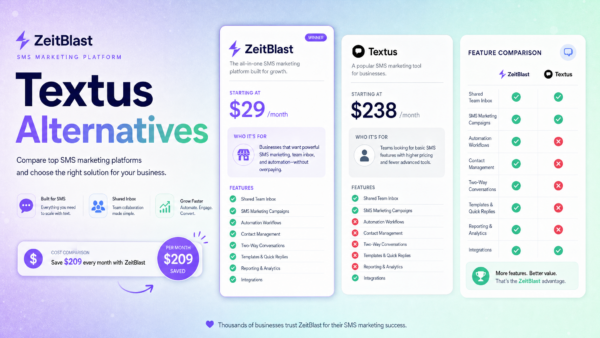
Textla’s pitch is simple: the cheapest way to send bulk texts. At $25/month plus $0.01 per message, the sticker price is among the lowest in the category. For a small business that wants a basic blast-and-reply tool with minimal overhead, that headline is appealing.
The fine print changes the math. Textla is a bring-your-own-Twilio (BYOC) platform. You create and maintain your own Twilio account, buy your number through Twilio, register 10DLC through Twilio’s Trust Hub, and pay Twilio’s carrier fees — all separately. Textla’s $0.01 sits on top of a Twilio bill you manage yourself. That’s not a deal-breaker for technically inclined small teams, but it’s not a simple plug-and-play service either.
Pick Textla if you’re a small business sending under ~20,000 texts/month, are comfortable standing up and managing your own Twilio account, and want the lowest possible sticker price for basic blasting and two-way replies.
Pick ZeitBlast if you need a truly all-in platform — one vendor, one bill, no Twilio project to manage — with built-in compliance, an AI that works your leads, and pricing that becomes more cost-effective at any real operating volume.
What Is Textla?
Textla is a lightweight SMS platform built on a BYOC (bring-your-own-carrier) model. Rather than managing carrier relationships directly, Textla routes through Twilio — the industry’s most widely used SMS infrastructure provider. Users connect their own Twilio account to Textla, which provides the front-end interface for sending campaigns and managing conversations.
The result is a tool that’s genuinely fast to get started with once your Twilio account is set up, and genuinely cheap on the surface. The trade-off is that all the infrastructure management — number registration, 10DLC compliance, carrier fees — lives in your Twilio account, not inside Textla itself.
For a technical co-founder or developer who already uses Twilio, that’s not a burden. For a real estate agent, sales team, or marketing operator who wants to focus on leads rather than infrastructure, it adds meaningful friction.
Textla Pricing (2026): What It Leaves Out
Textla’s published plans are straightforward:
| Plan | Monthly Price | Annual Price | Per SMS Segment | Per MMS |
| Starter | $25 | $19 | $0.01 | $0.03 |
| Professional | $50 | $39 | $0.01 | $0.03 |
Credits don’t expire, which is a genuine plus. But the plan price is only half the picture.
What’s not in Textla’s price — because it lives in your Twilio bill:
| Twilio Cost | Approximate Amount |
| Phone number rental | ~$1–$2/month per number |
| Carrier fees (SMS) | ~$0.0075–$0.01/message (see Twilio SMS pricing) |
| 10DLC brand registration | $4 one-time |
| 10DLC campaign registration | $15/month |
| 10DLC carrier vetting | $1.50–$10/month depending on carrier |
So the realistic all-in cost for Textla Professional is: $39/month (annual) + $0.01/text (Textla) + Twilio’s carrier fees (~$0.0075/text) + number rental + 10DLC fees. The effective per-message rate is closer to $0.018–$0.020/text, not $0.01.
Revised cost comparison:
| Monthly Texts | Textla Pro (Annual, including Twilio estimate) | ZeitBlast |
| 5,000 | ~$139 sticker + ~$50 Twilio = ~$189 | $495/mo (15,000 texts) |
| 10,000 | ~$139 + ~$100 Twilio = ~$239 | $495/mo |
| 20,000 | ~$239 + ~$200 Twilio = ~$439 | $495/mo |
| 30,000 | ~$339 + ~$300 Twilio = ~$639 | $795/mo |
At 30,000 texts, Textla’s sticker suggests ~$339 — but the actual bill including Twilio runs closer to $639, which exceeds ZeitBlast’s Time to Scale plan while delivering far fewer features.
ZeitBlast’s pricing is genuinely all-in: plan fee, carrier costs, incoming messages, everything — one bill.
Textla Features & What It Does Well
Low entry price: Even accounting for Twilio, Textla is among the cheaper options for very small-volume senders who already have Twilio familiarity.
Shared two-way inbox: Teams can manage inbound replies from a shared inbox, tag conversations, and route threads. Basic but functional.
Bulk SMS broadcasts: Standard mass send capability. Reliable at the Twilio deliverability level.
Contact segmentation: Segment contact lists for targeted sends.
Keyword campaigns: Text-to-join keyword opt-in flows. Functional for basic subscriber acquisition.
Scheduled and recurring sends (Pro): The Professional plan adds scheduling and recurring campaign functionality.
Non-expiring credits: Unused credits don’t expire — a genuine advantage over platforms with monthly-expiring credit buckets.
Fast setup for Twilio users: If you already have Twilio configured, Textla can be operational very quickly. Reviewers praise the setup speed.
US-based support: Personal, responsive support team is frequently praised. A real differentiator in a category where support quality varies widely.
Textla Compliance & 10DLC
This is where Textla’s BYOC model creates the most friction. Because Textla routes through your Twilio account, 10DLC registration happens inside Twilio’s Trust Hub — not inside Textla. You’re responsible for:
- Creating a brand registration in Twilio’s Trust Hub
- Registering your campaign use case
- Paying Twilio’s 10DLC fees ($4 brand + $15/month campaign + carrier vetting fees)
- Managing ongoing compliance settings (opt-out handling, quiet hours, list hygiene)
This is all manageable for a technical team that knows Twilio. For an operator focused on lead generation — not infrastructure management — it’s a meaningful operational overhead.
TCPA compliance under the Telephone Consumer Protection Act requires more than registration. Scrubbing lists against DNC registries, filtering numbers flagged as litigators, enforcing message timing restrictions — these are ongoing requirements that Textla’s platform doesn’t automate. ZeitBlast builds unlimited DNC and litigator scrubbing into every outbound send automatically, with no configuration required.
One additional note: Textla’s user reviews mention that inbound replies consume credits on some configurations. For a conversational lead gen operation where two-way exchange is the point, that can materially increase real costs.
Where Textla Falls Short
The hidden Twilio bill. Textla markets “no hidden carrier fees,” which is technically accurate — the carrier fees are in Twilio’s separate bill that you manage. For operators who aren’t already Twilio-native, this is a significant setup and ongoing management burden.
No automation workflows. Textla’s ceiling is recurring campaigns and scheduled sends. There’s no behavioral trigger automation, no multi-step drip sequences beyond recurring, and no visual workflow builder. For lead gen operations that need sequences to run automatically based on lead behavior, Textla doesn’t deliver.
No mobile app. Consistently the most-cited complaint in Textla’s reviews. Managing a lead gen or sales texting operation from a desktop-only tool in 2026 is a meaningful limitation.
No native API. Textla’s integrations are Twilio (already required) and Zapier. No REST API, no webhooks, no Make.com. Custom integrations require building on top of Twilio.
No AI conversation handling. The inbox is manual. Someone needs to watch for replies and respond.
No CRM integration (direct). Getting data into Salesforce, HubSpot, or Zoho requires Zapier, which adds another moving part to maintain.
No behavioral triggers. You can’t trigger messages based on lead actions, link clicks, or CRM events without building Zapier workflows.
Thin review base. Textla’s review data is limited — a handful of reviews on Trustpilot and a small Capterra set. It’s harder to evaluate at scale compared to platforms with hundreds of verified reviews.
The Best Textla Alternatives in 2026
1. ZeitBlast (Best for Lead Generation at Volume)
All-inclusive pricing, purpose-built for outbound lead generation. No Twilio account to manage, 48-hour 10DLC, AI conversation agent, unlimited compliance scrubbing, and direct CRM integration.
2. SimpleTexting
Flat monthly plans, clean interface, no BYOC complexity. Broader feature set than Textla. Good for teams that want predictable billing without infrastructure management.
3. SlickText
Credit-bucket pricing with unlimited contacts and rollover. Established platform with strong onboarding. No Twilio dependency.
4. Textedly
15 credit tiers for steady-volume bulk campaigns. Managed 10DLC. Simpler compliance footprint than Textla’s self-serve Twilio setup.
5. EZ Texting
One of the oldest SMS marketing platforms. Fully managed infrastructure, broad feature set, no BYOC requirement. Can be expensive at volume.
ZeitBlast vs. Textla: Head-to-Head
| Feature | Textla | ZeitBlast |
| Pricing model | $25–$50/mo + $0.01/text + Twilio bill | Flat monthly plans, all-in |
| Plans | Starter $25/mo, Pro $50/mo | $495–$1,495/mo |
| Per-text cost (true all-in) | ~$0.018–$0.020 (with Twilio) | Included in plan |
| Carrier fees | Paid to Twilio separately | Included |
| Incoming messages | May consume credits | Always free |
| Credit rollover | Yes (non-expiring) | Yes |
| 10DLC registration | Self-serve in Twilio | Built-in, 48-hr approval |
| DNC/Litigator scrub | Not included | Unlimited, built-in |
| AI Conversation Agent | No | Yes |
| Drip automation | Recurring campaigns only | Full automated sequences |
| CRM integration | Via Zapier | Direct (Salesforce, HubSpot, Zoho) |
| Mobile app | No | — |
| API | Twilio API (separate account) | Direct REST API |
| Deliverability | Twilio-grade | 98%, direct carrier relationships |
| Carrier-safe batching | No | Yes |
| Phone support | No | Live phone support |
| Twilio account required | Yes | No |
| Best for | Twilio-familiar small teams, low volume | Lead generation, real estate, sales at scale |
Who Should Use Textla?
Textla makes sense if:
- You’re a small business or solo operator sending under ~20,000 texts/month
- You’re already comfortable with Twilio and have an existing account
- You want the lowest sticker price for basic blasting and two-way replies
- You don’t need automation workflows, AI, mobile access, or CRM integration
- You’re technically inclined and fine managing your own SMS infrastructure
For a developer building a simple internal notification system or a small retailer doing occasional blasts, Textla’s setup speed and low entry price are real advantages.
Who Should Choose ZeitBlast Instead?
ZeitBlast is the right call when:
- You want one vendor, one bill — no Twilio account to stand up and maintain
- You’re texting leads at volume (real estate, mortgage, sales, insurance) where compliance and deliverability are mission-critical
- You need 48-hour 10DLC approval — not a self-serve Twilio process with variable timelines
- You want unlimited DNC and litigator scrubbing firing automatically on every send
- You need an AI Conversation Agent that handles inbound replies, qualifies leads, and follows up automatically
- Your team needs live phone support when issues arise
- You require direct CRM push to Salesforce, HubSpot, or Zoho
- You’re operating at 30,000+ texts/month where ZeitBlast’s pricing is clearly superior even to Textla’s sticker (before Twilio)
ZeitBlast’s Time to Scale plan at $795/month includes 30,000 texts, unlimited incoming messages, credit rollover, and every feature above. Textla’s realistic all-in cost at 30,000 texts exceeds that — and delivers none of the compliance automation, AI, or lead gen infrastructure.
One bill. Zero Twilio projects. Real lead gen.
Request a ZeitBlast demo →
FAQ
How much does Textla really cost in 2026?
Textla’s plans are Starter ($25/month or $19/year) and Professional ($50/month or $39/year), plus $0.01 per SMS segment. But Textla is BYOC — you manage your own Twilio account and pay Twilio separately for number rental (~$1–2/month), carrier fees (~$0.0075/text), and 10DLC registration fees ($4 brand + $15/month campaign). The true all-in rate is closer to $0.018–$0.020 per text, not $0.01.
Is Textla really all-in at $0.01 per text?
No. Textla’s $0.01 is its platform credit — it sits on top of Twilio’s infrastructure, which you pay separately. Carrier fees, number rental, and 10DLC registration live in your Twilio account. ZeitBlast’s pricing is genuinely all-in — carrier costs included, no separate infrastructure bill.
Does Textla have a mobile app?
No. The most common complaint in Textla’s reviews is the absence of a mobile app. Managing SMS campaigns and conversations from a desktop-only interface is a real limitation for field-based teams.
Is Textla cheaper than ZeitBlast?
Below ~20,000 texts/month, Textla’s sticker price is lower than ZeitBlast’s plans. At higher volumes — and accounting for the separate Twilio bill — the gap closes and eventually reverses. ZeitBlast also includes compliance tools, AI, CRM integration, and phone support that Textla doesn’t offer.
What’s the best Textla alternative with no Twilio required?
ZeitBlast is a fully managed SMS platform with no carrier account to configure. It handles 10DLC registration (with 48-hour approval), manages compliance automation, and handles carrier relationships directly. SlickText, SimpleTexting, and Textedly are also fully managed alternatives.
Does Textla handle 10DLC compliance?
Textla supports 10DLC, but registration happens in your Twilio Trust Hub account — not inside Textla. You manage the process, the fees, and the ongoing compliance settings. ZeitBlast handles 10DLC registration for you with industry-leading 48-hour approval and built-in TCPA compliance automation on top.