
What 10DLC Actually Means
10DLC stands for 10-digit long code — the standard local phone number format that U.S. carriers have approved for business-to-consumer text messaging.
If your business wants to send text messages at scale — automated follow-ups, lead generation campaigns, appointment reminders, drip sequences — you need to do it through a 10DLC registered number. Without it, carriers treat your traffic as unverified spam and filter or block it before it reaches anyone.
The “long code” part just distinguishes it from short codes (5–6 digit numbers used for mass broadcasting) and toll-free numbers. A 10DLC number looks exactly like a regular local cell number to the recipient. That’s the point — it feels personal, not automated.
A2P stands for application-to-person. Any time software sends a text to a human — whether it’s a marketing platform, a CRM, or an automated drip campaign — that’s A2P messaging. 10DLC is the carrier-approved infrastructure for doing it legitimately.
Why Carriers Require It
For years, businesses used regular local numbers to send bulk texts with zero accountability. Carriers had no visibility into who was sending what. That created an environment where spam, scams, and phishing texts were rampant — and consumers started complaining. A lot.
AT&T, T-Mobile, and Verizon eventually built a fix: a registration system called 10DLC, administered through a third-party organization called The Campaign Registry (TCR). The logic is simple:
- You register your business identity and what you’ll be sending
- Carriers verify that information
- Approved senders get their messages delivered; unregistered senders get filtered
This is not optional. As of 2023, all major U.S. carriers enforce 10DLC registration for A2P business texting. Trying to send marketing or lead generation texts from an unregistered number means your messages either get blocked entirely or land with terrible deliverability rates.
The upside: once you’re registered and compliant, you get access to carrier infrastructure that unregistered senders simply can’t reach. ZeitBlast’s direct carrier relationships — combined with proper 10DLC setup — is one of the reasons our platform consistently delivers a 98% deliverability rate.
10DLC Numbers vs. 10DLC Campaigns
Two terms trip people up. Here’s the plain-English version:
10DLC Phone Number
A 10DLC number is a standard 10-digit local phone number that’s been registered for A2P business use. It looks indistinguishable from a personal cell number to the recipient. That local feel is a major advantage — people are far more likely to open and respond to a text from a local number than from a short code or a 1-800 number.
ZeitBlast includes a premium local sending number with every plan. You don’t need to source your own number — it comes with your account.
10DLC Campaign
A 10DLC campaign is a registered use-case record — not a marketing campaign in the traditional sense. It describes what you plan to send: your use case (marketing, lead generation, appointment reminders, etc.), sample messages, and how your contacts opted in.
Every 10DLC phone number must be linked to an approved campaign before it can send messages. The carrier needs to know both who is sending and what they’re sending. A number without an approved campaign linked to it won’t deliver.
Brand Registration vs. Campaign Registration
10DLC registration has two distinct stages. You need both.
Brand Registration
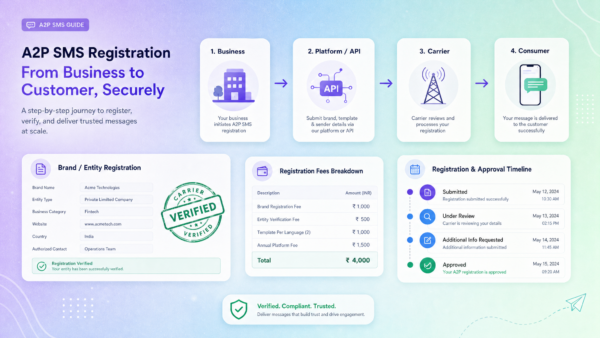
Brand registration establishes who you are. You submit your:
- Legal business name (must match IRS records exactly)
- Employer Identification Number (EIN)
- Business address
- Business website
Carriers run verification against public records. A mismatch — even something as minor as “LLC” vs. “L.L.C.” — will delay or reject your application. Your website also needs to be live and functional, with a privacy policy that covers SMS data.
Brand approval typically takes a few business days when the details are clean.
Campaign Registration
Campaign registration establishes what you’ll send. This is where most of the work happens — and where most rejections come from. You submit:
- Your use case (e.g., marketing, lead follow-up, appointment reminders)
- 2–5 sample messages written as realistic texts (not template placeholders)
- Your opt-in method — exactly how contacts consented to receive your texts
- Opt-out language confirming that recipients can reply STOP
Carriers compare your sample messages, use case, and website content for consistency. If your website looks like a real estate lead gen operation but your campaign says “appointment reminders,” expect friction.
How the Registration Process Works
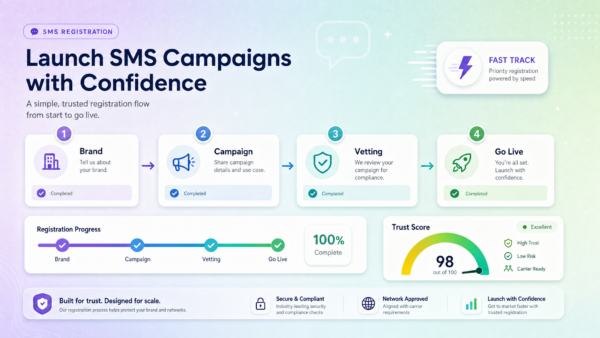
Here’s the full flow from start to sending:
1. Secure your sending number Your 10-digit local number is the foundation. With ZeitBlast, this is included — you don’t need to buy or port a number separately.
2. Register your brand Submit your business identity to The Campaign Registry through your messaging platform. ZeitBlast handles this on your behalf — you fill out the details in your dashboard and we file it.
3. (Optional) Vet your brand Third-party vetting can raise your trust score, which affects your sending throughput. If you’re planning to send at high volume, this step is worth it.
4. Register your campaign Submit your use case, sample messages, and opt-in proof. Again, ZeitBlast manages the filing — we pre-check your application against carrier requirements before submission to reduce rejection risk.
5. Carrier review TCR routes your brand and campaign to the major carriers for review. Brand review is usually faster; campaign review timelines depend on submission volume.
6. Go live Once approved, your numbers are linked to your campaign and you’re cleared to send within your throughput limits.
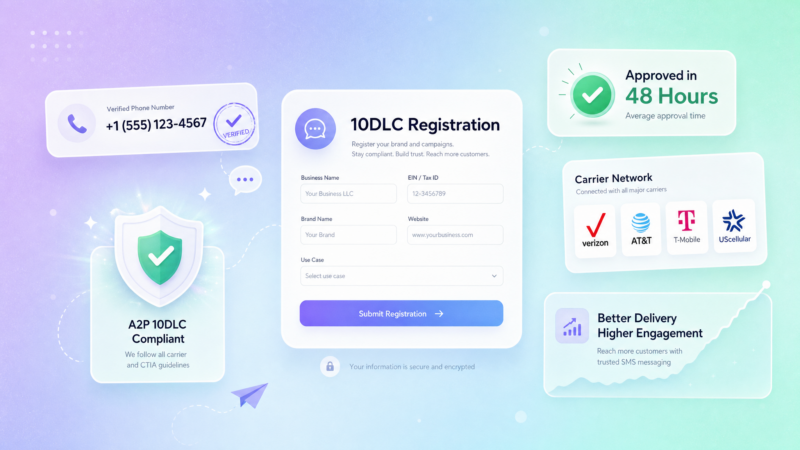
With ZeitBlast’s guided registration process, most customers get approved in as little as 48 hours — significantly faster than the industry average.
Trust Scores and What They Control
When your brand is approved, The Campaign Registry assigns it a trust score on a scale of 0–100. This score is consequential: it directly determines your daily sending throughput.
A higher trust score means carriers let you send more messages per day. A lower score means you hit daily caps sooner.
Trust scores are calculated based on:
- Quality of your business registration details
- Business age and size (for larger entities)
- Optional third-party vetting (for a fee)
T-Mobile in particular enforces hard daily sending limits based on trust score. Here’s a rough guide based on carrier documentation:
| Brand Type | Approx. Daily Volume (T-Mobile) | Across All Carriers |
|---|---|---|
| Sole proprietor | ~1,000 segments | ~3,000 segments |
| Low-volume standard | ~2,000 segments | ~6,000 segments |
| Standard (strong trust score) | 2,000+ segments | Scales with score |
If you’re sending lead generation campaigns to large lists, trust score isn’t a detail to overlook. ZeitBlast’s carrier-safe batching automatically manages send rates to stay within your throughput tier and avoid triggering carrier filters.
Why 10DLC Applications Get Rejected
Most 10DLC rejections are preventable. They tend to fall into a handful of recurring categories:
Business Name or EIN Mismatch
Carriers verify your details against IRS and public records. The most common rejection reason is a discrepancy between the name on the application and the name on official business documents. Copy it exactly — including punctuation.
Website Problems
A weak, incomplete, or broken website will get your application flagged. Carriers expect:
- A live, functional site (not “coming soon”)
- A privacy policy that references SMS data collection
- Content consistent with your stated use case
If your website says you’re a real estate company but your campaign description is vague or mismatched, expect rejection.
Poor Sample Messages
Sample messages need to look like real texts you’d actually send. Placeholders like {FirstName} or [business name] are a red flag. Write out realistic examples as if you were texting an actual lead today.
Prohibited Use Cases
Not all business types can use 10DLC. The following are categorically rejected:
- SHAFT content: Sex, Hate, Alcohol, Firearms, Tobacco
- High-risk financial offers (payday loans, debt relief)
- Affiliate marketing and lead aggregation
- Cryptocurrency promotions
If your use case falls into a prohibited category, switching to a permitted use case isn’t just a technicality — it’s the difference between getting approved and not.
Unclear Opt-In Documentation
Carriers need to see that your contacts actually consented to receive your messages. “We collected their numbers” isn’t enough. Show the mechanism: a checkbox at signup, a keyword opt-in campaign, a form, or written consent documentation.
How to Get Approved Fast
The fastest path through 10DLC registration is a clean application submitted right the first time. Every rejection sends you to the back of the review queue — which can add weeks.
Here’s how ZeitBlast accelerates the process:
Pre-submission review: Before we file your application, we check your details against carrier requirements. Business name matching IRS records, website quality, sample message language — we flag issues before they become rejections.
Guided campaign setup: Our dashboard walks you through exactly what carriers need for each field. No guessing what “opt-in description” means or how detailed your sample messages need to be.
48-hour approval track: ZeitBlast’s direct carrier relationships and established filing processes mean our customers get approved faster than businesses filing independently. Most get cleared in as little as 48 hours.
Compliance built in: Once you’re live, ZeitBlast’s carrier-safe batching, automatic opt-out handling, and unlimited DNC & litigator scrub keep you compliant on every send — not just at registration time.
10DLC vs. Toll-Free Numbers vs. Short Codes
When evaluating SMS infrastructure for your business, you’ll encounter three number types. Here’s how they compare:
| 10DLC | Toll-Free | Short Code | |
|---|---|---|---|
| Number format | 10-digit local number | 1-800/866/etc. | 5–6 digit number |
| Registration | Brand + campaign via TCR | Toll-free verification | Carrier-by-carrier approval |
| Approval time | Days to weeks | 1–2 weeks | 6–12 weeks |
| Local feel | ✅ Yes | ❌ No | ❌ No |
| Cost | Lower | Moderate | High |
| Best for | Lead gen, marketing, drip campaigns | Transactional messages | Very high-volume mass sends |
For most sales-focused businesses — especially in real estate and B2C lead generation — 10DLC is the right infrastructure. It delivers a local number feel at a fraction of the cost of short codes — see Twilio’s A2P 10DLC overview for a technical deep-dive — with registration timelines that don’t take months.
Frequently Asked Questions
Is 10DLC registration required for business texting? Yes. Any business sending A2P texts from a standard 10-digit U.S. number must be 10DLC registered. Carriers filter or block unregistered traffic.
How long does 10DLC registration take? Brand approval typically takes a few business days. Campaign review timelines vary — currently running 10–15 days at most providers. ZeitBlast’s process gets most customers approved in as little as 48 hours.
Do I need an EIN to register for 10DLC? Yes. U.S. businesses register with a federal Employer Identification Number that must match IRS records. Sole proprietors may have alternative options, but a standard EIN is the cleanest path.
What’s the difference between a 10DLC campaign and a marketing campaign? A 10DLC campaign is a carrier registration record describing your use case and message type. It has nothing to do with individual campaigns you run in your messaging platform. You can run unlimited marketing campaigns within an approved 10DLC campaign registration.
What happens if I text without 10DLC registration? Your messages will be filtered or blocked by the major carriers. You’ll see very low deliverability and no way to troubleshoot it through normal channels.
Can I register for 10DLC myself? Yes, through a messaging provider that files to TCR on your behalf. But the requirements are detailed, rejections are common for first-timers, and every rejection adds time. Using a platform like ZeitBlast that pre-checks and guides the process significantly reduces the risk of delays.
Start Sending with Confidence
10DLC isn’t optional, but it doesn’t have to be complicated. The businesses that get stuck are the ones navigating carrier requirements alone, filing incomplete applications, and waiting weeks to restart after rejections.
ZeitBlast handles the 10DLC registration process for you — brand filing, campaign setup, pre-submission review — and our direct carrier relationships mean you’re not sitting in a generic queue. Most customers are approved and sending in as little as 48 hours.
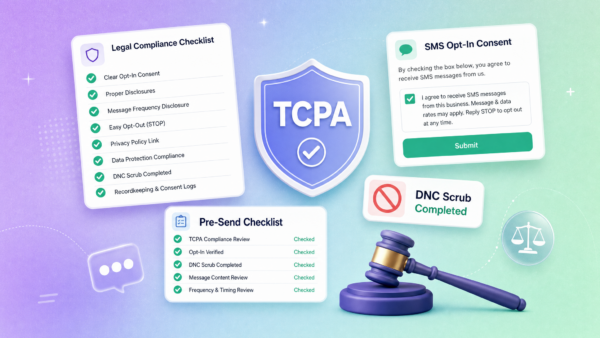
Once you’re registered, see how to stay compliant on every send in our TCPA Compliance Guide (rules enforced by the FCC), or walk through the full step-by-step registration process in our 10DLC Registration Guide.
Ready to start texting? Request a ZeitBlast Demo and we’ll walk you through setup — registration included.