
Political text messaging delivers reach that no other channel matches. Open rates on SMS run 95–98%, with most messages read within three minutes of delivery (Subtext 2026 SMS Marketing Benchmarks). Campaigns sent roughly 15 billion political texts in the 2022 cycle (NBC News), and political mobile message volume reportedly tripled in 2024 compared to the 2022 midterms (Proofpoint). Voter texts work — which is exactly why carriers have built serious infrastructure to filter the ones that don’t play by the rules.
In 2026, the bar is clear: major U.S. carriers block effectively all unregistered A2P traffic. Political organizations that complete 10DLC registration, including political identity verification through The Campaign Registry, get their messages delivered. Those that don’t get silently filtered.
This guide covers the full compliance picture: what the rules require, how carrier registration works for political senders, operational best practices, and what distinguishes political campaigns that see real results from those that spend the budget and get nothing back.
Important: This is practical guidance from an SMS software company, not legal advice. For the authoritative rules on what is or isn’t required for your specific program, consult the FCC, the CTIA Messaging Principles, and qualified legal counsel.
Why Political Texting Is Both Powerful and Complicated
The numbers make the case for political SMS: response rates on political text campaigns typically range from 4–25% depending on the ask, with GOTV reminders and event RSVPs hitting the higher end (CampaignCNX). Compare that to email open rates in the 15–25% range for political lists, and SMS wins by a significant margin.
But the same volume that makes the channel valuable also makes it a target for abuse. Spam robotexts have eroded voter trust. Carriers have responded with increasingly aggressive filtering of unregistered traffic. The compliance requirements that feel like bureaucratic overhead exist precisely because the channel’s effectiveness attracted bad actors.
The practical reality for campaigns in 2026:
- Unregistered traffic gets blocked. There is no workaround for sending A2P volume from unregistered numbers.
- The rules aren’t political-specific. Being a campaign, committee, or PAC doesn’t exempt you from consent and registration requirements.
- Setup time is real. Political identity verification through TCR takes days and must be completed before any message can move. Build this into your calendar well before GOTV.
TCPA and Political Texting: What the Rules Actually Say
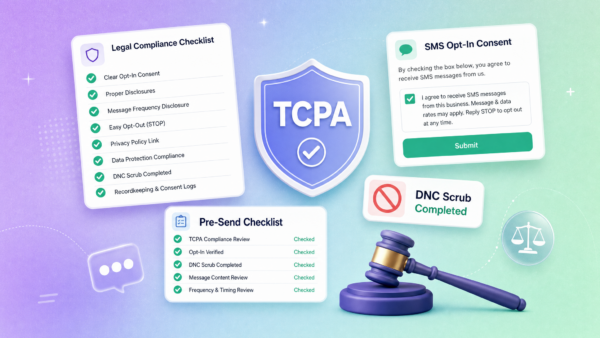
The most common misconception in political texting is that political speech gets a blanket exemption from federal telecommunications law. The Telephone Consumer Protection Act (TCPA) doesn’t carve out political content as a category — it focuses primarily on how messages are sent.
Here’s the framework:
Automated texting (A2P broadcasting) Using software to send texts in bulk to mobile numbers — which is how every SMS platform operates — generally follows the same consent expectations as commercial texting. The TCPA’s autodialer provisions apply based on the technology and method of sending, not the content.
Peer-to-peer (P2P) texting When a human volunteer or staffer manually sends individual texts — one conversation at a time, without automated dialing systems — the legal picture is different. P2P texting tools exist specifically for this reason. But “P2P” has specific technical meaning: actual human-initiated, one-at-a-time sends. Platforms that automate bulk sends and call it “P2P” are taking on significant legal risk.
The Do-Not-Call Registry Mobile numbers on the National DNC Registry are part of the picture. The interaction between DNC rules and political messaging is nuanced — another reason to work with counsel for your specific program.
The practical playbook:
- Get consent where you can document it
- Identify your organization in every message
- Make opt-out easy and honor it immediately
- Don’t rely on “it’s political” as a compliance shield
10DLC and TCR Registration for Political Campaigns
Compliance gets you legal. Registration gets your messages delivered. These are two separate problems, and in 2026 you need to solve both.
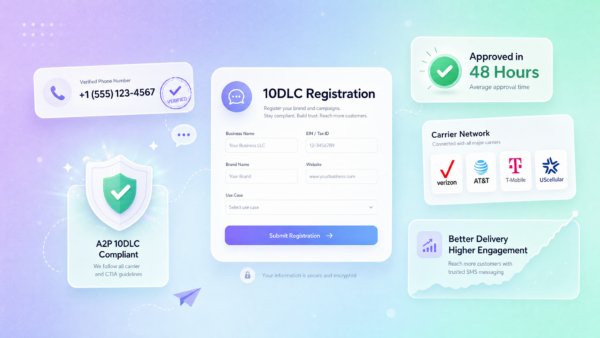
U.S. carriers route all A2P text traffic through the 10DLC framework, administered by The Campaign Registry (TCR). Political senders go through a modified process with additional steps.
Brand Registration
Your organization — the committee, PAC, party organization, or authorized vendor — registers as a brand with TCR.
Required information:
- Legal name of the organization (exactly as registered with the FEC, state election authority, or IRS)
- EIN or equivalent tax ID
- Physical address and contact information
- Website (must be live with a privacy policy that references SMS)
- Organization type and vertical (Political)
Brand registration typically clears in 1–3 business days when the application is clean and complete.
Political Identity Verification
This is the step most first-time political senders miss — and the one that causes the most timeline problems.
Before TCR will approve a political brand, you must complete political identity verification: an additional process that confirms the organization is a legitimate political entity. This verification is handled through TCR’s authorized verification partners and requires documentation beyond standard brand registration.
Plan for this to take 3–7 business days, sometimes longer. This is a carrier requirement, not a platform one — every SMS provider puts their political clients through the same process. There’s no shortcut, and starting late has consequences: you cannot send A2P political texts until verification is complete and your campaign is approved.
Start political identity verification as early as possible in your election cycle. Campaigns that begin this process weeks before they need to send are the ones that aren’t scrambling when GOTV crunch hits.
Campaign Registration: Political Use Case
After brand approval and political identity verification, you register the actual messaging campaign.
For political senders, this means:
- Selecting the “Political” use case — this is critical. Misregistering a political campaign under a different use case (marketing, customer care) gets the campaign throttled or rejected. The Political designation unlocks the throughput rates political programs require.
- Submitting sample messages — real messages that reflect what you’ll actually send. Voter contact messages, GOTV reminders, event invitations, donation asks. Include opt-out language in at least two samples.
- Documenting your opt-in process — how voters and supporters are being added to your list, including whether you’re using existing contact files, new opt-in forms, or petition lists.
Content that will not be approved:
- Messages without sender identification
- Content that doesn’t match the registered use case
- SHAFT-category content
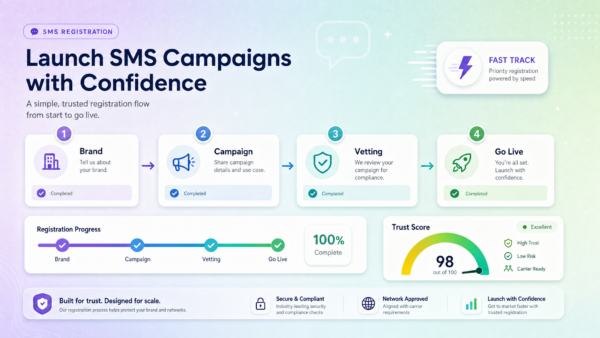
| Registration Stage | Typical Timeline | Notes |
|---|---|---|
| Brand registration | 1–3 business days | Faster with complete, accurate filings |
| Political identity verification | 3–7 business days | May take longer; start early |
| Campaign registration (Political) | 7–15 business days | Queue-dependent in 2026 |
| Number linking and go-live | Same day | Links after campaign approval |
Quiet Hours, Opt-Outs, and Sender Identification
Three operational requirements carry the most practical compliance risk for political programs. None are optional.
Quiet Hours
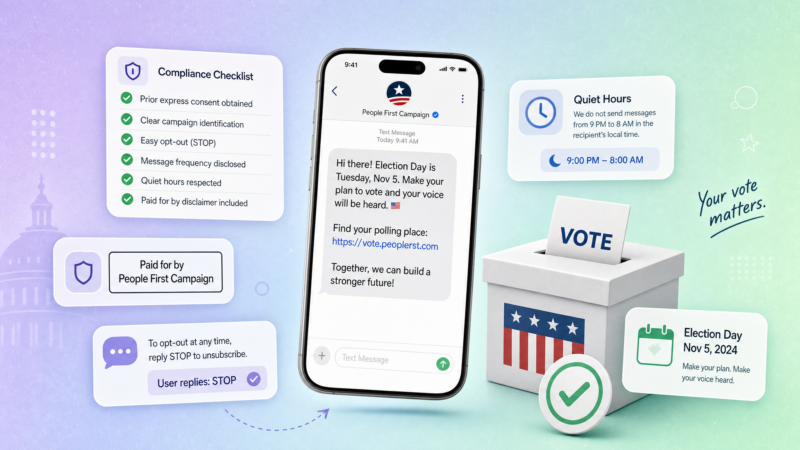
The federal standard, and the floor recommended by the CTIA Messaging Principles, is 8 a.m. to 9 p.m. in the recipient’s local time zone. Political messages sent outside this window generate complaints, spam reports, and carrier flags.
Several states enforce stricter windows — some as early as 8 p.m. cutoffs. See the State “Mini-TCPA” Laws section below.
With ZeitBlast, quiet hours are enforced automatically using zip-to-timezone mapping. Messages queued for contacts in time zones where sending isn’t permitted are held until the window opens — no manual management required.
Opt-Out Handling
Every contact who replies STOP must be permanently removed from your list and never messaged again — automatically, immediately. This isn’t optional, and it isn’t a manual process you can manage with a spreadsheet.
Best practices for political opt-out management:
- Honor STOP instantly and irreversibly
- Also suppress common variations: UNSUBSCRIBE, CANCEL, QUIT, END
- Never re-add a STOP contact to a list without documented re-opt-in
- Keep opt-out records for the duration of the campaign cycle and beyond
ZeitBlast processes opt-outs automatically. The moment STOP is received, the contact is suppressed across all future sends. You don’t manage this manually.
Sender Identification
Every political text message must clearly identify the organization or committee behind it. This is a carrier expectation and good political practice — voters who don’t know who’s texting them generate spam complaints.
The rule of thumb: your organizational identity (not just a candidate’s first name, not just “the campaign”) should appear in the first message you send and be readily available in any message on request. Include it in your opening message template:
[Committee/Organization Name]: [Your message here.] Reply STOP to opt out.
P2P vs. A2P: Which Is Right for Your Program?
Political campaigns often use both methods for different parts of their outreach. Understanding the distinction matters for compliance, platform selection, and throughput planning.
| Peer-to-Peer (P2P) | Automated A2P | |
|---|---|---|
| What it is | A human manually sends each message, one at a time | Software sends messages in bulk to a list |
| Legal treatment | Generally treated differently from automated systems under TCPA | Subject to full TCPA and 10DLC requirements |
| Use case | Volunteer phone banks, high-touch individual outreach | GOTV blasts, event reminders, donor asks, list-scale contact |
| Speed | Limited by human capacity | High throughput with registered campaign |
| Requirements | Carrier rules still apply; must honor opt-outs | Full 10DLC registration, political use case, identity verification |
| Best for | Persuasion and conversational outreach | Scale broadcasts and automated follow-up sequences |
Most successful political programs use A2P for scale broadcasts and P2P for the high-value personal touch. The key is matching the tool to the use case — and being clear on what “P2P” actually requires technically.
State “Mini-TCPA” Laws
Federal rules are the baseline. A growing number of states have enacted their own texting statutes — often called “mini-TCPAs” — that impose stricter requirements than the federal standard.
States with notable texting-related statutes or restrictions include Florida, Oklahoma, Washington, and others. These laws vary but often include:
- Earlier quiet-hour cutoffs (e.g., stopping at 8 p.m. rather than 9 p.m.)
- Stricter consent language requirements
- Additional opt-out mechanisms
- Private right of action (meaning individuals can sue, not just regulators)
The safe approach for multi-state campaigns: identify the strictest applicable rule for each recipient state and apply it. If you’re texting into Florida, follow Florida’s standard for those contacts — don’t assume the federal floor covers you.
This is an actively evolving area of law, with new state legislation appearing regularly. Work with counsel to map current requirements for every state where your program operates.
What Effective Political Texting Actually Looks Like
Compliance gets your messages delivered. Craft determines whether they work. The political programs generating real results have a few things in common.
Lead with Identity and Purpose
The first line of your first message should tell the recipient exactly who you are and why you’re texting. Don’t bury the lede. Voters who don’t immediately recognize the sender hit STOP or ignore the message.
[Committee Name]: Hi [FirstName], it's [Candidate/Org] reaching out
about the [issue/election]. [One-line ask]. Reply STOP to opt out.
Keep It Short and Human
One idea. One ask. One link. Walls of text read as spam and depress reply rates. The best political texts could have been sent by a real person — which is the point.
Segment Your Audience
Volunteers, donors, undecided voters, GOTV targets, and event invitees are different audiences with different relationships to your campaign. Sending the same message to all of them is a waste of list capacity and goodwill.
ZeitBlast’s segmentation tools let you:
- Filter by custom tags (volunteer status, donor tier, precinct, issue interest)
- Trigger different automated sequences based on how contacts respond
- Route replies to specific staff members or the ZeitBlast AI Conversation Agent for immediate follow-up
Make One Clear Ask
RSVP here. Pledge to vote. Find your polling place. Donate now. Each message should have a single, unmistakable call to action with one link. Multiple asks split attention and reduce conversion.
Staff the Inbox
Reply rates on well-executed political SMS programs range from 4–25% depending on the ask (CampaignCNX). Those replies are where persuasion actually happens — and leaving them unanswered wastes the most valuable conversations your campaign generates.
With ZeitBlast, all replies flow into a shared inbox. Staff and volunteers can respond from a single view, tag conversations, filter by segment, and use templates with merge fields for fast, personalized replies. The ZeitBlast AI Conversation Agent can handle initial reply triage automatically, qualifying contacts and escalating conversations that need a human touch.
Timing Matters
Test send times by segment. GOTV reminders perform differently than event invitations, which perform differently than donation asks. Early-week sends (Tuesday–Thursday) tend to outperform Monday morning or Friday afternoon for most political use cases, but your audience data should drive the decision.
How ZeitBlast Supports Political SMS Programs
ZeitBlast is a compliance-first SMS platform built for organizations that need to text at volume — campaigns and political committees included.
What ZeitBlast provides for political programs:
- Guided 10DLC registration — we walk you through brand registration, political use case setup, and help you prepare for political identity verification. The registration process is documented, and our team is available to support the process.
- Automatic opt-out handling — STOP is processed instantly, permanently, across all future sends. No manual list management.
- Timezone-aware quiet hours — every contact is evaluated against their local time zone using zip-to-timezone mapping. Messages outside the permitted window are held, not dropped.
- Unlimited DNC and litigator scrub — every send is checked against the National DNC Registry and litigator watchlists before messages go out. Included on all plans.
- Carrier-safe batching — messages are sent at carrier-approved rates to protect campaign standing and deliverability.
- AI Conversation Agent — automatically handles incoming replies, qualifies conversations, and routes hot responses to staff — no full-time VA required.
- Real-time analytics — monitor delivery rates, reply rates, opt-outs, and link clicks as campaigns run.
- Push to CRM — one-click integration with Salesforce, HubSpot, and Zoho for syncing contact data and conversation history.
ZeitBlast plans:
| Plan | Price | Texts/Month | Best For |
|---|---|---|---|
| I’m Serious | $495/mo | 15,000 | Local races, small committees |
| Time to Scale | $795/mo | 30,000 | Growing campaign operations |
| Market Dominator | $1,495/mo | 65,000 | Statewide races, high-volume programs |
All plans include unlimited incoming messages, credit rollover, live phone/chat/email support, and 10DLC approval in as little as 48 hours.
One thing to plan for: Political identity verification through TCR is a carrier requirement, not a platform one. Every SMS platform — including ZeitBlast — must put political clients through this process. What ZeitBlast does is make the rest (compliance, quiet hours, opt-outs, delivery infrastructure) automatic so your team can focus on the outreach.
👉 Request a Demo — See ZeitBlast’s Political SMS Features
Frequently Asked Questions
Is political text messaging legal? Yes. Campaigns text voters every election cycle. The practical requirement is following TCPA basics (consent for automated texting, opt-out handling, quiet hours) and completing carrier registration via 10DLC/TCR with political identity verification. Whether a specific program meets every legal requirement depends on how messages are sent and which states are contacted — work with counsel for your specific situation.
Do political campaigns get an exemption from TCPA? Not a blanket one. TCPA rules focus primarily on how messages are sent rather than what they say. Automated A2P broadcasts are subject to the same registration and consent expectations as commercial texting. Human-initiated P2P texting is treated differently. “It’s political” is not a compliance defense on its own.
Do political campaigns need 10DLC registration? Yes. To send A2P texts that are delivered (not filtered) by major U.S. carriers in 2026, campaigns must register a brand with The Campaign Registry, complete political identity verification, and register a Political use case campaign. Unregistered political traffic is effectively fully blocked.
What is political identity verification with TCR? It’s an additional step in the 10DLC process for political senders. Before TCR approves a political brand for the Political use case, the organization must complete a verification process confirming it is a legitimate political entity. This takes days and must be initiated early. It’s a carrier requirement, not a platform one.
What hours can campaigns text voters? The federal standard is 8 a.m. to 9 p.m. in the recipient’s local time zone. Several states enforce stricter windows. For multi-state programs, identify the strictest applicable rule for each contact’s state and apply it.
What’s the difference between P2P and A2P political texting? P2P (peer-to-peer) involves a human sending each message individually — limited in speed but treated differently under TCPA. A2P (application-to-person) is software-automated bulk texting, which requires full 10DLC registration. Most campaigns use both: A2P for scale broadcasts and P2P for high-touch volunteer outreach.
What should every political text message include? At minimum: your organization’s identity (committee or PAC name), the purpose of the text, and clear opt-out instructions (“Reply STOP to opt out”). Including this in your first message — and making it easy to find — reduces complaints and keeps your campaign standing intact with carriers.
Related Reading
- A2P 10DLC Registration: Requirements, Cost & Timeline
- TCPA Compliance for Business Texting
- SMS Opt-In: Compliant Examples, Templates & Language
- What Is SMS Marketing?
Running political outreach and need compliance handled automatically? ZeitBlast builds quiet hours, opt-out handling, DNC scrubbing, and carrier-safe delivery into every send — so your team focuses on voters, not compliance spreadsheets.